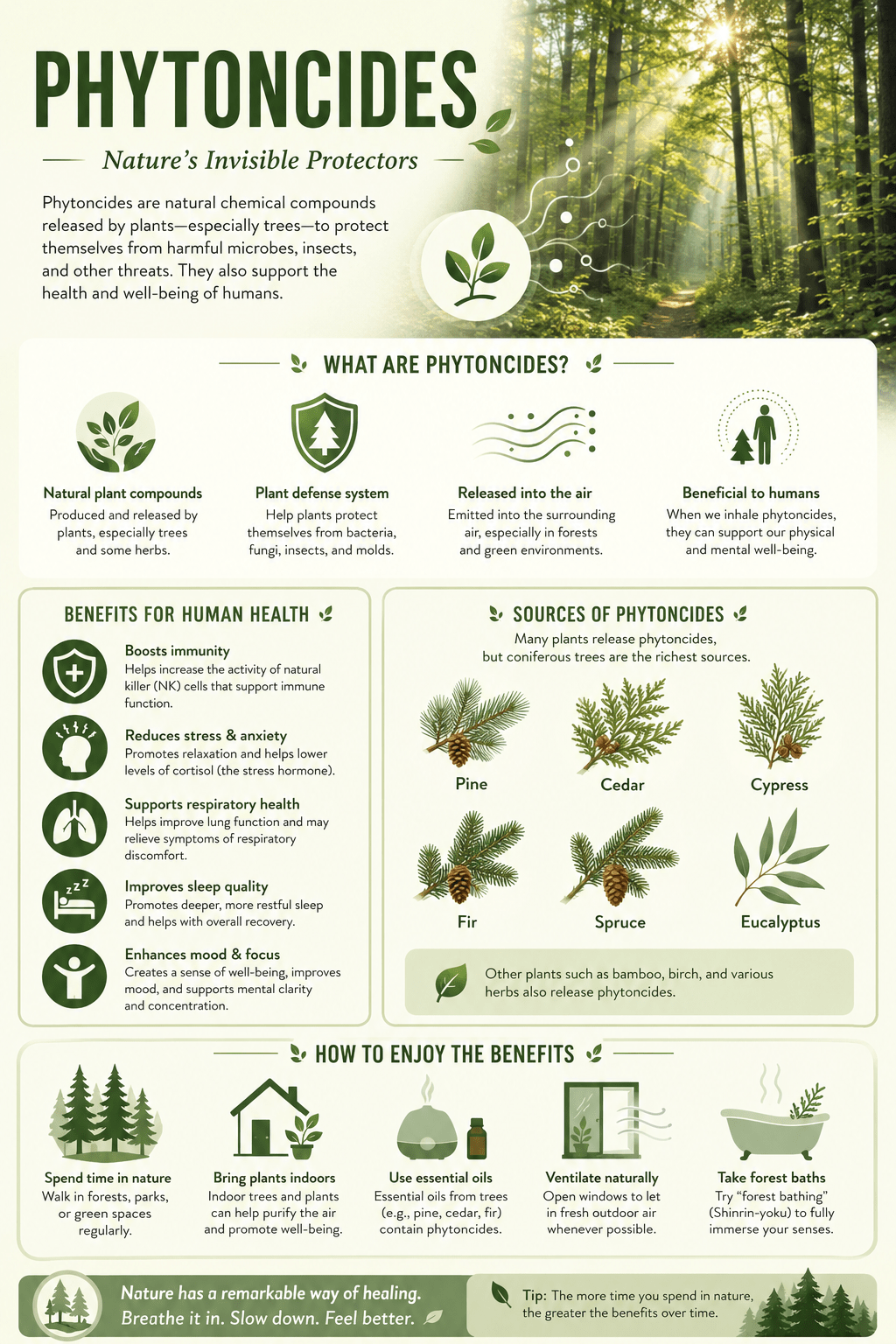
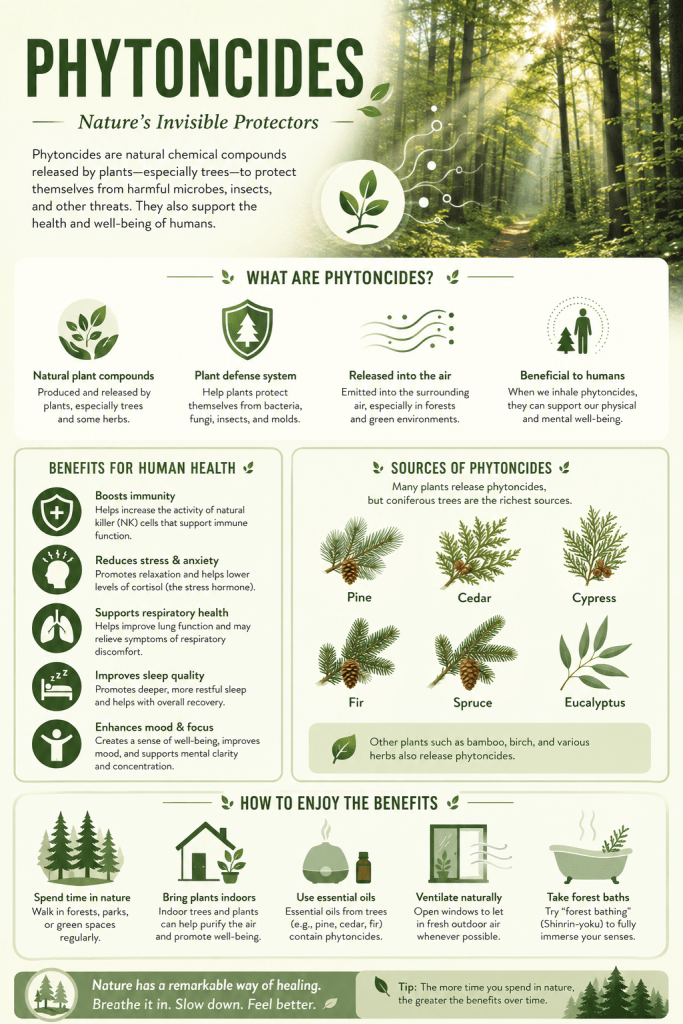
Phytoncides are natural chemical compounds released by plants—especially trees—as part of their defense system. These substances help protect plants from harmful bacteria, fungi, insects, and other environmental threats. When released into the air, particularly in forest environments, phytoncides can also have beneficial effects on human health and well-being.
In nature, phytoncides are most commonly produced by trees and certain herbs. Coniferous trees such as pine, cedar, cypress, fir, and spruce are especially rich sources, along with plants like eucalyptus. However, many other plants—including bamboo, birch, and various herbs—also release these beneficial compounds.
When humans inhale phytoncides, they can experience a range of health benefits. Research suggests that phytoncides may help boost the immune system by increasing the activity of natural killer (NK) cells, which play a key role in fighting infections. They are also known to reduce stress and anxiety by lowering cortisol levels, the body’s primary stress hormone. In addition, phytoncides can support respiratory health, improve sleep quality, and enhance overall mood, focus, and mental clarity.
There are several simple ways to incorporate phytoncides into daily life. Spending time in nature—such as walking through forests, parks, or green spaces—is one of the most effective methods. Bringing plants indoors can also help purify the air and promote a sense of well-being. Using essential oils derived from trees, such as pine, cedar, or fir, can provide similar benefits. Opening windows to allow fresh air inside and practicing “forest bathing” (also known as shinrin-yoku) are additional ways to immerse yourself in these natural compounds.
Nature offers a powerful and accessible way to support health. The more time you spend in natural environments, the greater the potential benefits. Simply breathing in the forest air, slowing down, and being present can have a meaningful impact on both physical and mental well-being.
~Step into Stillness~

 alabamaforesthealingco
Leave a comment